There is a blurb in my Danish Language and Culture workshop that explains the meaning of “Hvordan går det?” It means “How are you?” but Danes don’t use it in the same way that Americans do. In Denmark, This phrase is used to start off a conversation with someone you already know. It is not a greeting for strangers. The U.S.’s popular greeting of “How are you?” can sound disingenuous at times. When I worked at McDonald’s, customers would come up to the counter and say “How are you? I would like a number one.” Usually, they would ignore my answer or they wouldn’t even wait for an answer. However, some customers actually care about the workers. Sometimes the answers to that simple question actually mean something to the person asking and the person answering. So there are positives and negatives with these social customs.
The same day I learned about this phrase, I stopped into Irma to buy flowers for my host family, and the cashier greeted me with “Hvordan går det?” He had to translate it because the Danish went right over my head. We struck up a quick conversation and I left Irma with the knowledge that he had an ex-girlfriend in Raleigh, NC. Wack, right? The customs and traditions I learn about in class are not the standard for all Danes. That would be crazy if everyone acted the same. I could read all I want about a culture and learn a lot, but living in the culture provides a much more nuanced understanding of it.
Back to the travel details. At Friday’s party, we had a 3 course meal with champagne. After we wined and dined, the teachers performed Robyn’s “Dancing on my own” and it was better than if Robyn showed up herself. We were drinking alongside our teachers! You don’t see that in the U.S. In different parts of the Højskole, there was dancing, karaoke, and people just talking. I even got up to sing a karaoke version of The Cranberries’ “Zombie” with our Community Advisor, Sofie. This Højskole has definitely changed me.
The next day, the DIS students planned on going to Tivoli, but we stopped at a harbor instead. Tivoli can wait. I think we reached Nyhavn, but I’m not sure. Maybe it was mini Nyhavn.
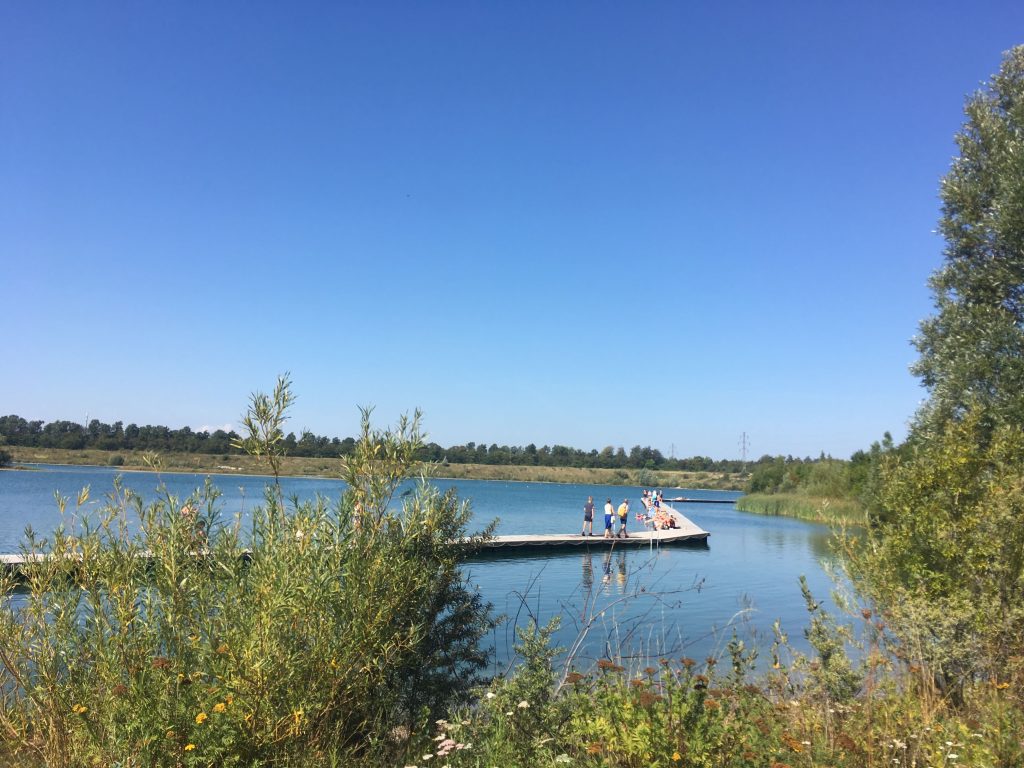
On Sunday, a RoFH student took us to an old quarry to swim. It was crazy how clean the water was. I’m not used to this in the middle of Ohio!
My visiting host family invited me to dinner at their apartment and then we walked around Frederiksberg. They are such sweet people. I’m glad I got matched with them.
On Wednesday I went on a field study with my Danish Language and Culture class to Gilleleje, Denmark. We went into a church/kirke that housed Jewish people during World War II. The teacher leading the tour told us that about 80 Jews hid in the attic and almost all of them were sent to Theresienstadt. We walked by the plaques on the ground marking where Jewish people hid from the Nazis and where they escaped to Sweden. One of the plaques said “hope” in Hebrew.
I know! It’s a depressing note to end on, but it was an eye-opening experience.
Vi ses!

 A North Carolinian in Copenhagen
Hey Lady – “hope” is never a depressing word to end on…! Love this series!
LikeLike