Hej! This past week I went to two cemeteries that looked almost identical. One in Nørrebro and one in Roskilde. It is common here to go on a Tinder date in cemeteries, have picnics, walk dogs, LARP (maybe–I made that one up). Cemeteries are for the living and the dead! It’s not much different in the U.S. Although you might not see as many Tinder dates in American cemeteries. Spreading out your smørrebrød toppings while surrounded by dead bodies may not seem like an auspicious start to a relationship.
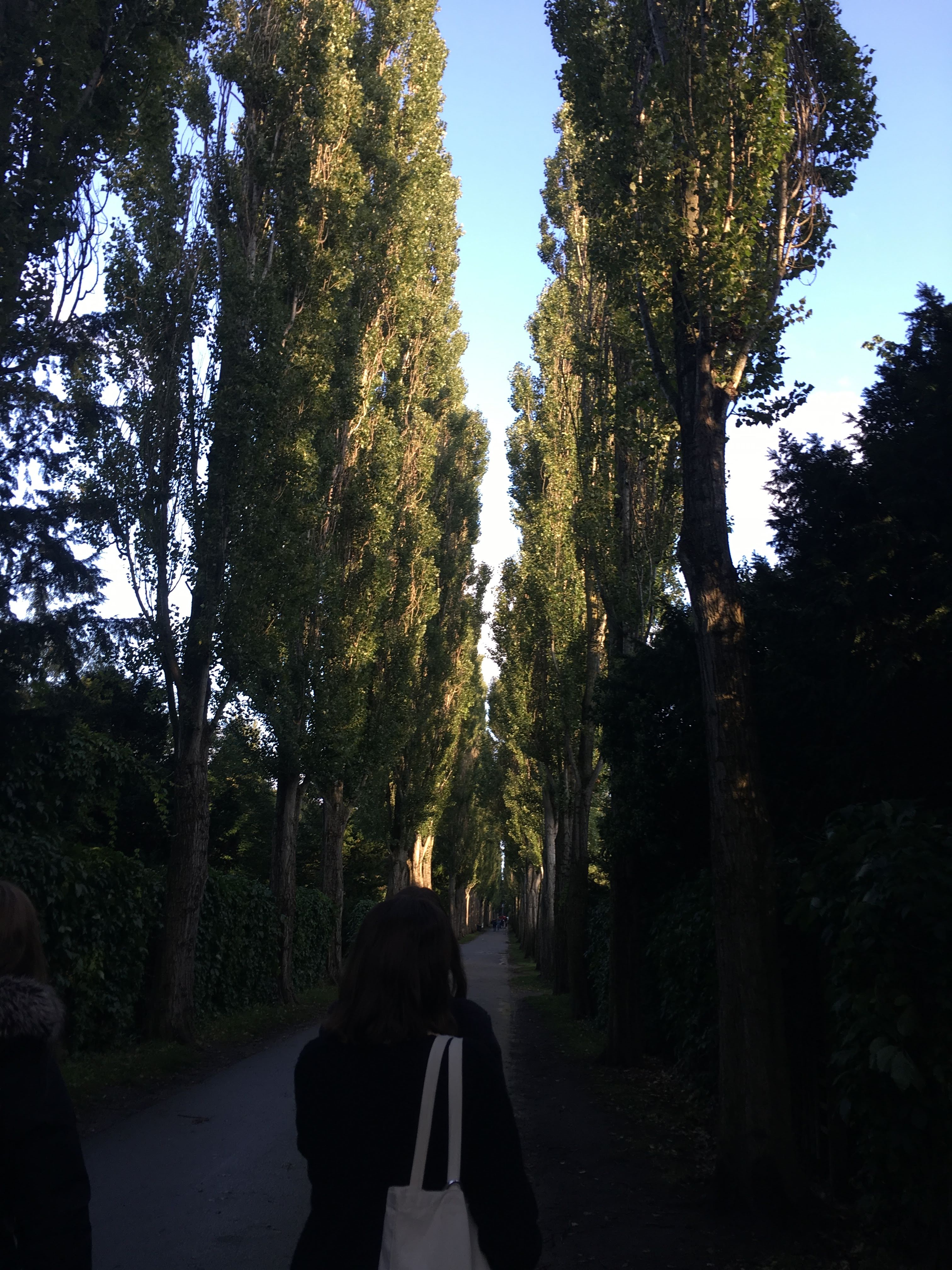
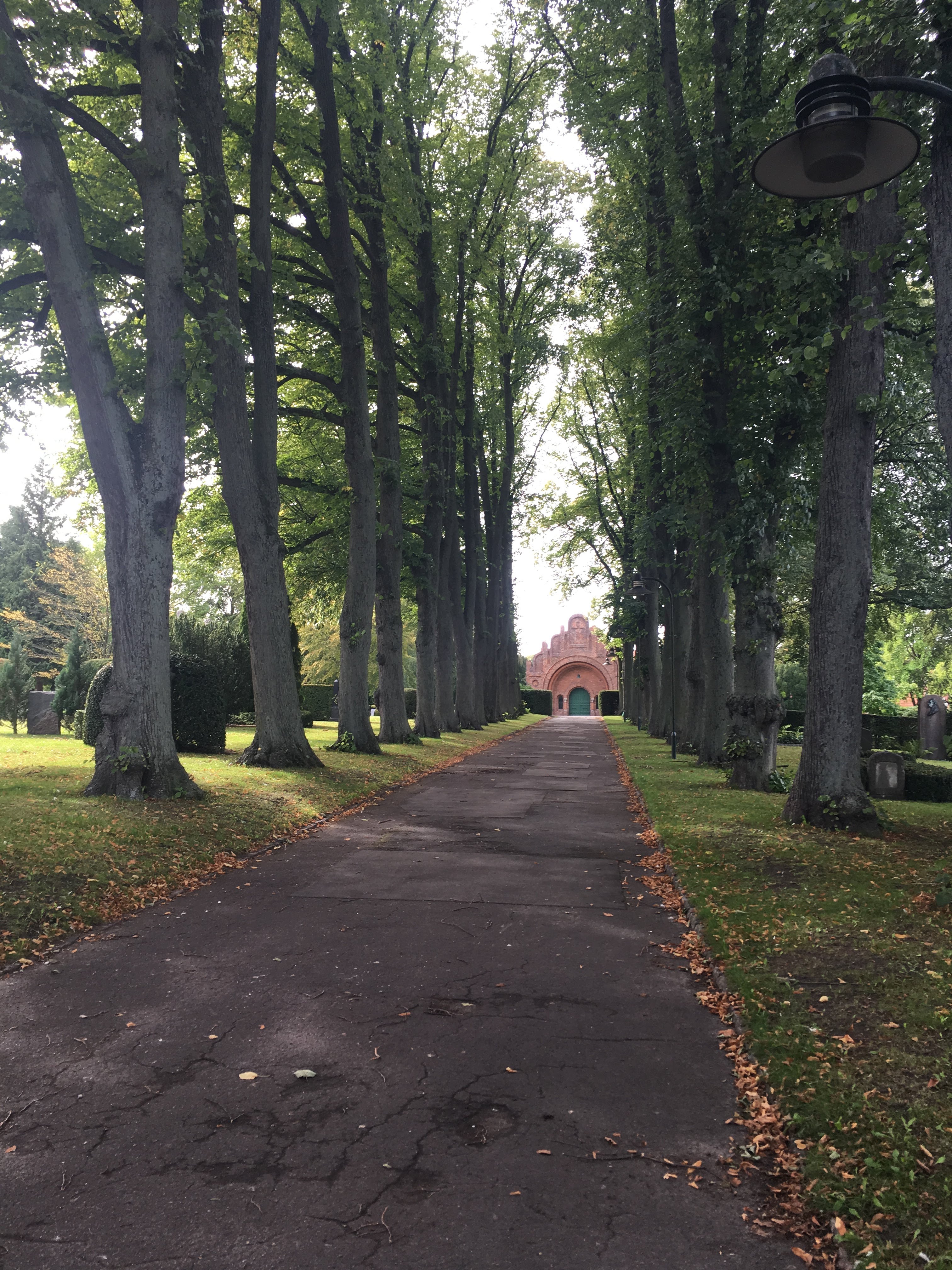
Left: cemetery in Nørrebro. Right: cemetery in Roskilde. What’s with these tall lines of trees? Does the dead need their privacy?
On Wednesday, I walked around Frederiksberg on a group assignment for my Danish Language and Culture class. After walking past the monument several times without noticing it, I got caught in a hail storm and my group ran to take cover. I met up with the group at the Jeanne d’Arc Skolen and observed the statue in the rain. The monument commemorates the accidental bombing of the Jeanne d’Arc school in 1945.

That same afternoon, I took a bus up to Nørrebro for my Gender and Sexuality in Scandinavia class field study. By this point, my feet were soaking wet. My professor treated the class to warm bread and coffee and introduced us to the activist, Mary Consolata Namagambe. Mary was born in Uganda and grew up in Denmark. In the short bio she provided for us, she describes herself as a “Danish Ugandan activist, entrepreneur, writer, women’s rights and equality fighter and a law student.” She is the owner of She for She, a company in Kampala, Uganda that produces reusable pads. It goes without saying that Mary is one of the coolest people I’ve met.
Mary showed us around Nørrebro, a multi-ethnic community. We visited the Red Square, Blue Square, a playground with architecture that reflects the different cultures of the people living in the neighborhood, a homeless shelter, and a cemetery. She told us about the history of the places and the people of color/migrant communities living there. I learned so many things on this tour. Mary told us about this deplorable politician who went to schools in Nørrebro–there is a large Muslim population in this neighborhood–and desecrated the Qur’an in front of the children. He went back to the Blue Square and did the same thing. The second time he came, families gathered around him and ignored him. The third time, no one showed up at the square. I can’t believe that people can get away with this and have a political platform (Then again, look at Trump in America). The Danish politician gained enough votes to participate in the election. It is scary that there are a lot of people who believe the same things that he does.
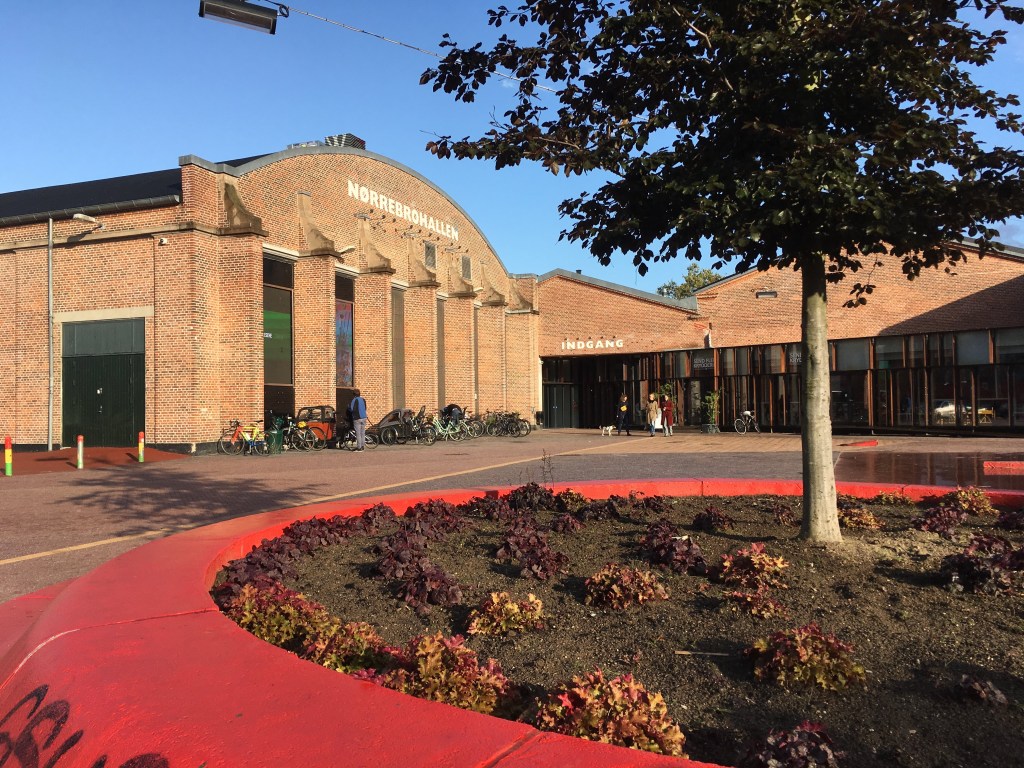
Afterwards, my friend Jess and I debriefed while getting the best felafel I’ve ever had at King of Kebab Pizza and Grill.
On Thursday, my Postcolonial Europe class visited the Voices from the Colonies exhibit at The National Museum. We saw videos of the heartbreaking stories of a Greenlandic woman, Helene Thiesen, who was required by the Danish government to go to school in Denmark. She lost her Greenlandic language and could not communicate with her mother when she returned to Greenland. Although Greenland was granted Home Rule in 1979, they are still fighting for independence and are in the process of decolonization.
On the weekend, I got to decompress. I reserved the daytime for homework, but hung out with my RoFH and DIS friends in the evening. I tried local beers at a microbrewery in Roskilde and danced with friends at a nightclub in Copenhagen. For me, 75% of the fun is in watching other people dance.
Hope you all have a great week! Vi ses!


 A North Carolinian in Copenhagen
Thanks Lillie! I’m jealous that other people got to dance with you… I miss that!
LikeLike
I miss your dancing!
LikeLike