Race has been on my mind for a long time. Coming from Wooster, Ohio, I’m used to living in white-majority towns; being in the minority is nothing new. However, I’ve found that race is not discussed as much as it is at my college. Going into coffee shops, restaurants, classrooms, and many public spaces, I see about two or three people of color. I was not surprised by this, having been warned by my school’s director of Off Campus Study. Nonetheless, I was not prepared for the lack of discussion on this phenomenon. I’ve observed that when white people are in the majority, they don’t notice or speak up about racial injustice. I know I’m generalizing because there are many white people who actively inform themselves about issues they don’t face.
Having very few people of color (POC) in my classrooms and housing feels isolating at times. It is burdensome to feel obligated to stand up for racial groups. I am very imperfect when trying to explain topics like cultural appropriation. I am not an expert; in fact, I don’t have many answers to questions about race. I just want to open up conversations about race so people can inform themselves.
In my core course, we had three speakers talk to the class about race and governmental representation of Greenland in Denmark. Dr. Temi Odumosu (who told us to address her as Temi) and Regine Møller talked about their experiences of being Black and Greenlandic, respectively, in Denmark. Jens Heinrich, a Greenlandic representative in Copenhagen, gave us an overview of the history of the relations between Greenland and Denmark. Temi is an activist and senior lecturer of Cultural Studies at Malmö University in Sweden. Regine was a Parliamentary candidate for Greenlandic representation in Denmark in the 2019 election. She is the chairwoman of the Greenlandic association Nalik in Denmark. Temi told us about the images of the commodification of Black women that pop up everywhere in Copenhagen, while she rarely saw actual Black women in the city. These images propagated the belief in a “post-colonial” Denmark. She said that sometimes Danish people could use race for their entertainment and marketing products while glazing over racism that still happens in the country. She could explain it much better in her piece, Open Images or Open Wounds: Colonial past and present in the city of Copenhagen.
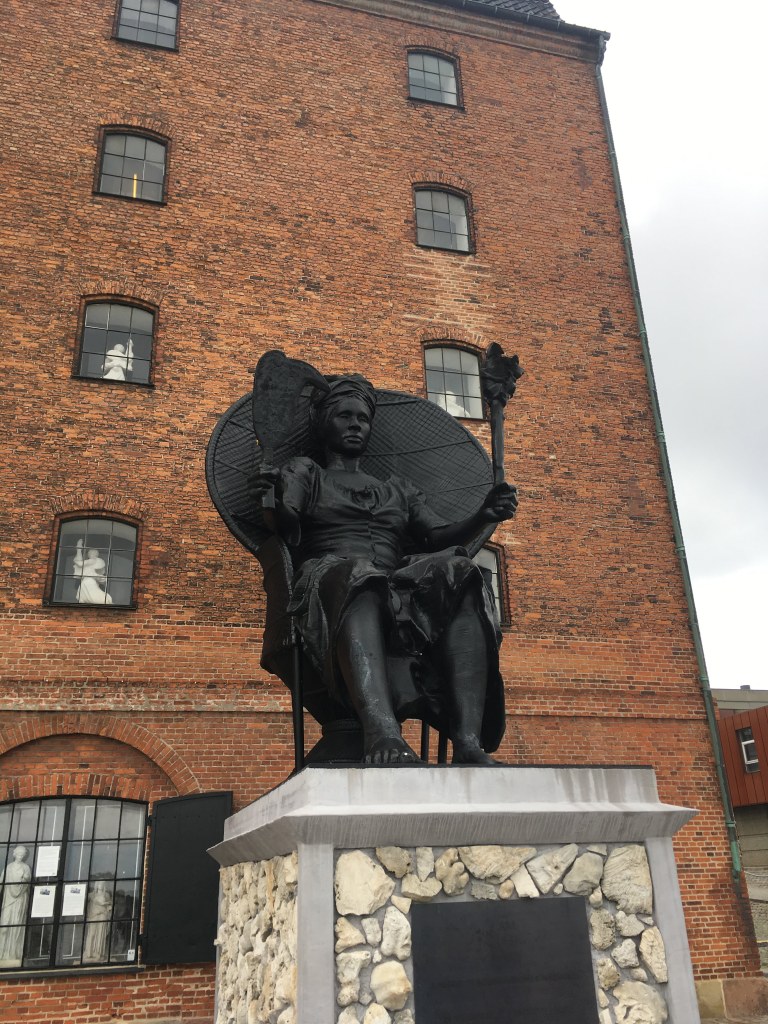
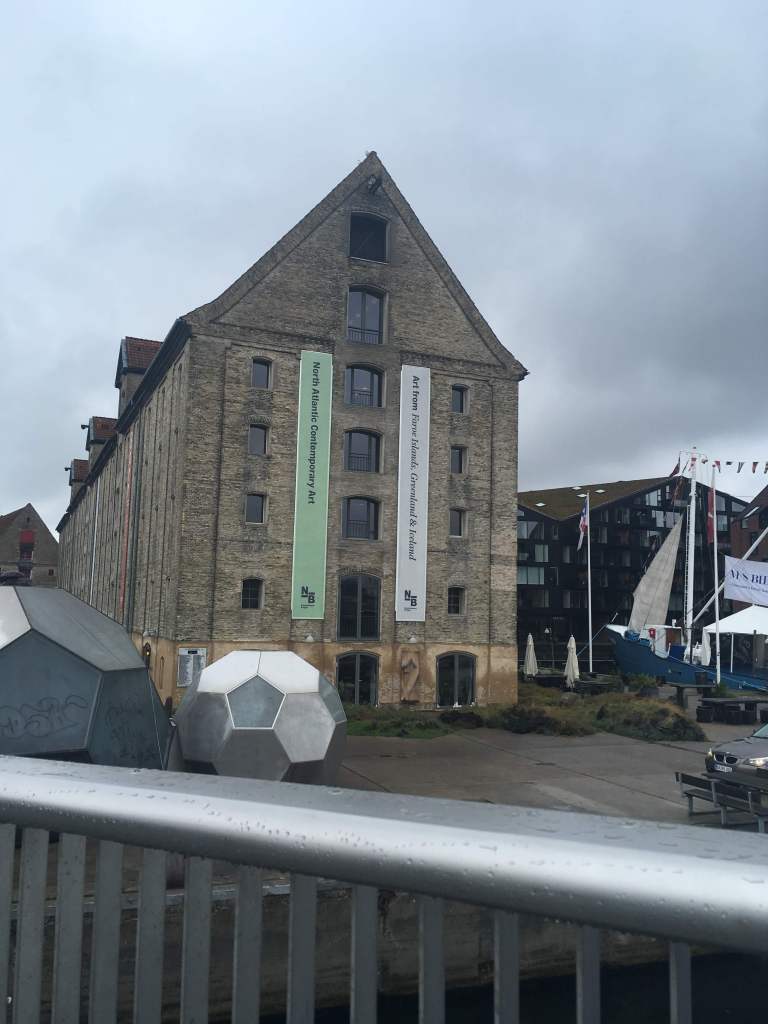
Outside of the museum in the West Indian Warehouse stands the statue, “I am Queen Mary.” It is a physical reminder of Denmark’s colonial past in the Danish West Indies which is now the U.S. Virgin Islands. The statue is an intervention in the narrative of a “post-colonial” Denmark. Queen Mary led a labor revolt against Danish sugar plantation owners in St. Croix in 1878. The statue commemorates the 100 year anniversary of when the U.S. bought the Virgin Islands from Denmark. Two artists of color, Jeannette Ehlers and La Vaughn Belle, conceptualized the idea. They had to fight to put up the statue. They have to clean the statue themselves. Their artistic work is an important addition to the Danish national narrative. I am so excited to meet Jeannette Ehlers at a seminar night for my class, Postcolonial Europe.
The activist, Regine Møller told us what it was like to be Greenlandic in the colonizer’s country. She told us that narratives of alcoholism, sexual abuse, and high suicide rates in Greenland tended to drown out positive narratives of the beauty of Greenlandic culture and decolonization movements. She has experienced many microaggressions in Denmark because she is Greenlandic.
I am meeting so many amazing people in my class study tours. They are bringing up topics that are close to my heart. I was not expecting to learn about race and colonialism in A Sense of Place in European Literature. But one’s “sense of place” is influenced by how they are perceived in different spaces. Race, ethnicity, gender, physical impairment, and so many aspects of identity shape how individuals experience a place. It makes sense that we don’t just learn about white Europeans’ experience of Europe.
I looked up articles that described different experiences of Denmark and came up with these in addition to the links above:
I don’t agree with “Until then, minorities in Denmark need to stand up and define themselves or Denmark will try to do the defining for them.” It shouldn’t be the minorities job to do the educating. White people should inform themselves and speak up when they think something is wrong.
2. Racist Comment Provoked Me, Then Made Me Think
3. Racism plays a role in migrants exclusion in Denmark
4. Denmark has a national songbook: My Creative Nonfiction professor wrote this! Critics argue that the song book is supposed to be apolitical; however, who says Ramadan is inherently political? I looked in the song book and it has The Beatles’ “Happy Xmas.” Shouldn’t there be songs about different experiences of Danish people? There’s also a lack of songs by women, POC, and queer songwriters.
These are just a few articles. I have so much to learn about race in Denmark. One blog post will not cover it all.
 A North Carolinian in Copenhagen